Parent Guides
Beach and Lake Safety for Kids: A Parent’s Guide
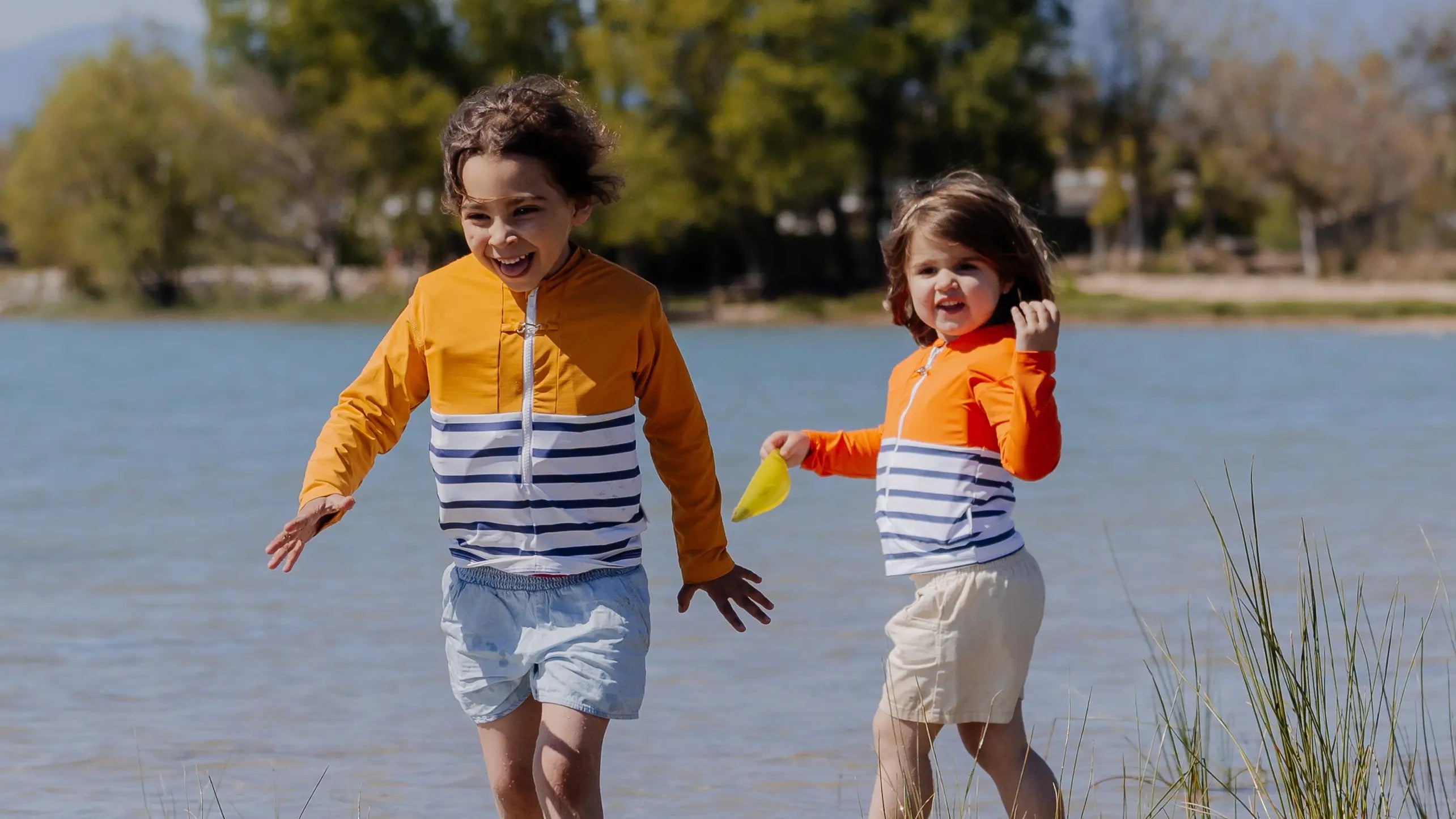
Open water is a different challenge from a backyard pool. Beaches and lakes add currents, waves, sudden drop-offs, cold water and poor visibility — all of which can overwhelm a child (and an adult) quickly.
Before you go
- Choose lifeguarded spots whenever you can, and read the warning flags.
- Check conditions: currents, tides, water temperature and weather.
- Set boundaries with your kids before they reach the water.
At the beach
- Understand rip currents. If someone is caught, they should swim parallel to shore until free of the pull, then angle back in. Never fight straight against a rip.
- Keep young children at the water's edge and within arm's reach.
- Watch for drop-offs and waves that can knock a small child off balance.
At the lake
- Beware cold-water shock. Sudden immersion in cold water causes an involuntary gasp and can incapacitate even strong swimmers.
- Murky water hides hazards and makes a struggling child hard to see — another reason a face-up flotation layer matters.
- No diving in unknown depths.
Gear that protects in open water
For unpredictable conditions, a wearable layer that works automatically is invaluable. A Floatee anti-drowning t-shirt inflates the instant a child goes under and turns them face-up — so a stumble off a sandbar or an unexpected current doesn't become an emergency. Adults can stay protected too with the adult range.
Pair good gear with the habits in our drowning-prevention guide.
Floatee is a supplementary safety aid, not a substitute for adult supervision.
Add an extra layer of protection
Floatee's automatic inflation technology gives your child a critical safety margin around water.
Shop Floatee for Kids